Judaism
Daniel
“And many of them that sleep in the dust of the earth shall awake, some to everlasting life, and some to shame and everlasting contempt.”
The concept of bodily restoration after death appears in Judaism, Christianity, and Islam as a definitive eschatological hope, though the mechanism and scope vary significantly. While Judaism and Islam posit a general resurrection of the dead at the end of time, Christianity uniquely centers on a singular, historical resurrection of Jesus as the paradigm and cause for the future general resurrection. Scholars debate whether the Zoroastrian Frashokereti represents a direct influence on these Abrahamic concepts or a parallel development within Indo-Iranian eschatology.
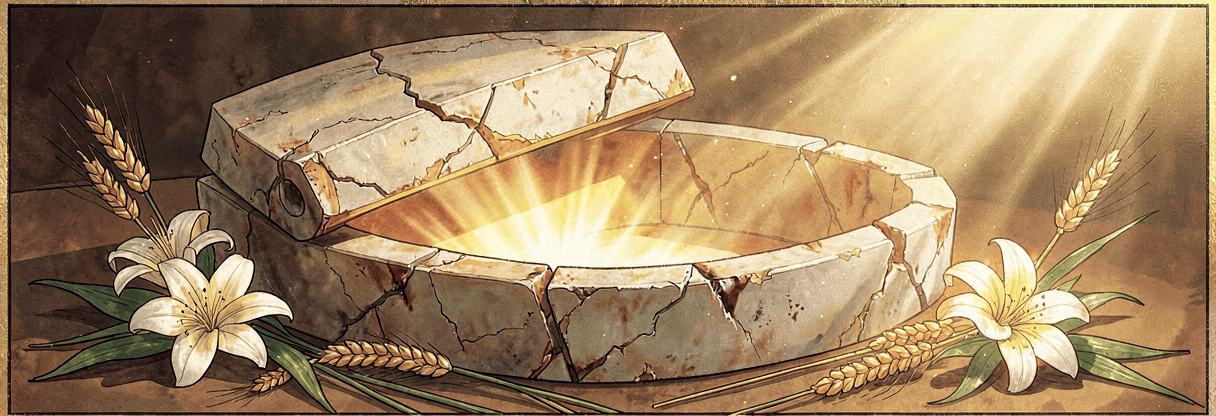
Across Judaism, Christianity, and Islam, the resurrection stands as a definitive eschatological hope wherein the dead physically rise by divine power to face final judgment. In Jewish thought, Daniel 12:2 promises that "many of them that sleep in the dust of the earth shall awake," establishing a collective awakening for the righteous without a singular prior redeemer. Similarly, Ezekiel 37:12 depicts God opening graves, a motif later interpreted as literal bodily restoration rather than mere national metaphor. Islam reinforces this universal decree, with Surah 75:3 challenging human skepticism: "Does man think that We cannot assemble his bones?" Surah 22:7 further affirms that Allah will raise all who are in the graves, emphasizing God's absolute capacity to reconstitute the body. Christianity shares this belief in bodily restoration but introduces a pivotal divergence: the resurrection of Jesus as a singular, historical event. As 1 Corinthians 15:20 declares, Christ has become the "firstfruits of them that slept," making the general resurrection contingent upon his prior victory. While John 11:43 illustrates Jesus's power to raise the dead, it serves as a proleptic sign of his own unique rising. Thus, while all three traditions affirm divine reassembly and judgment, Christianity uniquely centers the entire eschatological narrative on the Messiah's completed resurrection, whereas Judaism and Islam maintain a future, universal resurrection initiated solely by God at the end of time.
In Jewish thought, the resurrection is primarily an eschatological event for the righteous (or all Israel) at the end of days, as seen in Daniel, without a singular prior redeemer figure initiating it. The imagery of dry bones in Ezekiel is often interpreted as a metaphor for national restoration, though later tradition reads it as literal bodily resurrection.
Christianity distinguishes itself by presenting the resurrection of Jesus as a singular, completed historical event that guarantees the future resurrection of believers. This 'firstfruits' theology posits that the general resurrection is contingent upon and modeled after the specific resurrection of the Messiah.
The Qur'an emphasizes the resurrection as a demonstration of God's absolute power to recreate what was once destroyed, often using the analogy of reassembling bones. It rejects the Christian notion of a divine savior rising first, instead framing the resurrection as a universal, inevitable decree for all humanity.
No one has written anything here yet. Some places to begin:
Sign in to join the discussion.