Judaism
Exodus
“The first of the firstfruits of thy land thou shalt bring into the house of the LORD thy God. Thou shalt not seethe a kid in his mother’s milk.”
Both traditions utilize the agricultural metaphor of the first harvest to articulate divine priority and human obligation. In Judaism, the offering is a tangible ritual act tied to the land and the Mosaic covenant, whereas Christianity often spiritualizes the concept to describe resurrection or the status of believers. Scholars note that the Christian usage frequently functions typologically, reading the earlier agricultural laws as foreshadowing Christological realities. Despite the shift from physical sheaves to spiritual resurrection, the underlying principle of dedicating the initial yield to God remains constant.
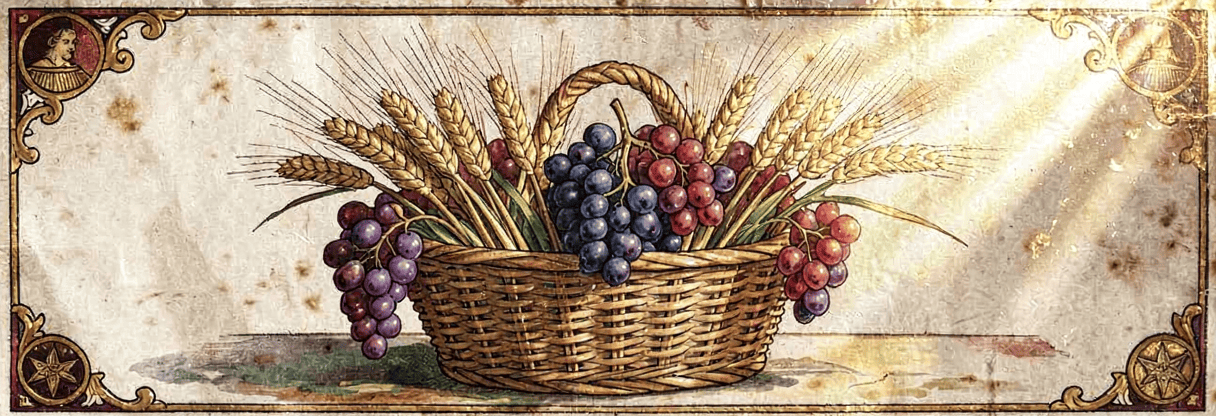
Both traditions employ the agricultural metaphor of the first harvest to articulate divine priority and human obligation. In Judaism, the obligation centers on the physical sheaf brought to the priest, grounding theology in land tenure and agrarian cycles. Exodus 23:19 commands, "The first of the firstfruits of thy land thou shalt bring into the house of the LORD thy God," while Leviticus 23:10 details the ritual entry into the promised land. This tangible act ensures the sanctification of the entire harvest through the dedication of its beginning, linking covenant fidelity to the soil. Conversely, the Christian usage frequently functions typologically, reading these earlier agricultural laws as foreshadowing Christological realities. In 1 Corinthians 15:20, Paul declares, "But now is Christ risen from the dead, and become the firstfruits of them that slept," shifting the focus from grain to resurrection. Similarly, James 1:18 describes believers as "a kind of firstfruits of his creatures," spiritualizing the concept to denote the status of the redeemed. Despite the shift from physical sheaves to spiritual resurrection, the underlying principle of dedicating the initial yield to God remains constant. Both systems affirm that acknowledging the deity's sovereignty over production consecrates the remainder of existence. However, where Judaism maintains the ritual's material connection to the land, Christianity reinterprets the agricultural law as a type fulfilled in the eschatological order, transforming the offering from a sheaf into a person.
The obligation centers on the physical sheaf brought to the priest, grounding the theology in land tenure and agrarian cycles. This ritual ensures the sanctification of the entire harvest through the dedication of its beginning.
The metaphor shifts from agricultural produce to human resurrection, identifying Christ or the Spirit as the primary offering. This reinterprets the agricultural law as a type fulfilled in the eschatological order.
No one has written anything here yet. Some places to begin:
Sign in to join the discussion.