Judaism
Isaiah
“Therefore thus saith the Lord GOD, Behold, I lay in Zion for a foundation a stone, a tried stone, a precious corner stone, a sure foundation: he that believeth shall not make haste.”
The motif of a divinely appointed foundation stone serves as a theological anchor in Judaism, Christianity, and Islam, representing stability, election, and the legitimacy of worship. While Judaism and Christianity identify this stone with Yahweh's presence in Zion or the person of Jesus Christ respectively, Islam locates the foundational act in the physical raising of the Kaaba by Abraham and Ishmael. Scholars note that the Christian interpretation often functions christologically to supersede the Jewish temple cult, whereas the Islamic narrative emphasizes the restoration of the primordial monotheistic sanctuary.
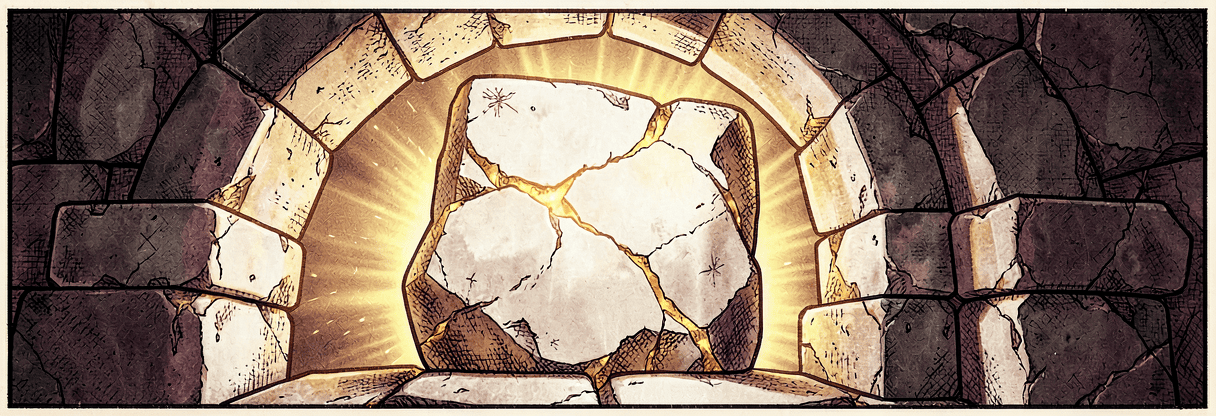
Across the Abrahamic traditions, the motif of a divinely appointed foundation stone anchors theological claims regarding stability, election, and legitimate worship. In the Hebrew prophetic tradition, Isaiah 28:16 declares, "Behold, I lay in Zion for a foundation a stone, a tried stone," establishing a metaphor for God's reliable covenant distinct from human political alliances. This text emphasizes the future restoration of the temple and nation rather than a specific individual, focusing on communal endurance. The New Testament reinterprets this imagery christologically; 1 Corinthians 3:11 asserts, "For other foundation can no man lay than that is laid, which is Jesus Christ." Here, the locus of divine presence shifts from a physical building to the person of the Messiah and the ecclesial community, often functioning to supersede the Jewish temple cult. Conversely, the Islamic narrative in Surah Al-Baqarah 2:127 recounts the historical construction of the Kaaba by Abraham and Ishmael: "And when Abraham and Ishmael were raising the foundations of the House, (they prayed): Our Lord! Accept from us." This account emphasizes the literal act of raising walls and the prayer for acceptance, restoring a primordial monotheistic sanctuary rather than establishing a messianic typology. While all three traditions view the laying of the foundation as an act of obedience and a test of faith, Judaism and Christianity diverge on the stone's identity—covenantal promise versus incarnate person—whereas Islam locates the foundational act in the physical restoration of the sanctuary by patriarchal figures.
In the Hebrew prophetic tradition, the stone is a metaphor for God's reliable covenant with Zion, distinct from human political alliances. The focus remains on the future restoration of the temple and the nation rather than a specific individual.
The New Testament reinterprets the Isaiah prophecy christologically, identifying Jesus as the rejected stone that becomes the head of the corner. This shifts the locus of divine presence from a physical building to the person of the Messiah and the ecclesial community.
The Qur'anic account focuses on the historical construction of the Kaaba by Abraham and Ishmael as a literal foundation for monotheistic worship. The emphasis is on the physical act of raising the walls and the prayer for acceptance, rather than a messianic typology.
No one has written anything here yet. Some places to begin:
Sign in to join the discussion.