Judaism
Genesis
“I am a stranger and a sojourner with you: give me a possession of a buryingplace with you, that I may bury my dead out of my sight.”
The motif of earthly existence as a transient pilgrimage is central to the soteriological frameworks of Judaism, Christianity, and Islam, where the believer is defined by their non-belonging to the material world. While all three traditions utilize the terminology of the 'stranger' or 'sojourner' to denote a provisional status on earth, Judaism often emphasizes the legal and covenantal rights of the resident alien within the community, whereas Christianity and Islam frame the concept more eschatologically as a departure from the world toward a heavenly or eternal home. Scholarly debate persists regarding whether the biblical 'pilgrim' language implies a rejection of social integration or merely a reorientation of ultimate loyalty, a distinction that becomes more pronounced in the Islamic conception of the dunya as a place of testing rather than a permanent dwelling.
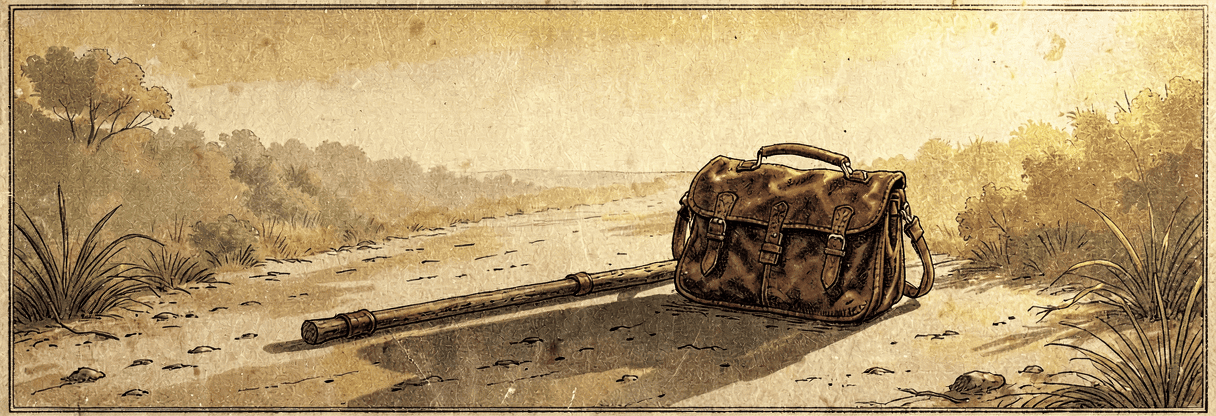
Across Judaism, Christianity, and Islam, the believer is fundamentally defined as a transient sojourner, a status that reorients ethical conduct and ultimate hope. In the Hebrew Bible, this motif balances legal integration with theological humility; Abraham declares, "I am a stranger and a sojourner with you" (Genesis 23:4), while the Psalmist pleads, "for I am a stranger with thee" (Psalms 39:12). Here, the 'ger' possesses specific covenantal rights within the land, even as the community acknowledges Yahweh's ultimate ownership. Christianity universalizes this alienation, shifting focus from land tenure to spiritual citizenship. The faithful are urged to live as "strangers and pilgrims," abstaining from worldly lusts (1 Peter 2:11), having seen promises "afar off" (Hebrews 11:13). This frames existence as a journey toward a "better country" rather than a temporary stay within a specific territory. Islam similarly contrasts the provisional 'dunya' with the eternal 'akhirah.' The Qur'an describes worldly life as merely "diversion and amusement," asserting that the true home lies in the Hereafter (Surah 29:64). While Judaism emphasizes the stranger's rights within the community, Christianity and Islam prioritize the soul's detachment from the world system. All three traditions, however, converge on the conviction that human possession is provisional, grounding ethics in the awareness that the earth is a place of testing, not a final destination.
In the Hebrew Bible, the status of the 'ger' (sojourner) is often legally codified, granting rights and protections within the covenant community while acknowledging the land belongs to Yahweh. The tension lies between the call to integrate and protect the stranger and the theological assertion that Israel itself is a sojourner, balancing social ethics with eschatological hope.
Christian texts frequently universalize the sojourner motif, applying it to all believers who confess their citizenship is in heaven rather than on earth. This shifts the focus from the legal status of the alien within a specific land to a spiritual alienation from the world system, emphasizing the soul's journey toward a 'better country'.
The Qur'anic concept of the 'dunya' as a game and amusement contrasts with the 'akhirah' (Hereafter) as the true, eternal life, framing the pilgrimage as a moral test rather than a physical journey to a promised land. The believer is a traveler whose primary duty is to prepare for the return to God, distinguishing the temporary nature of worldly life from the permanence of the afterlife.
Going somewhere, on foot, because of God. The Hajj, ritual pilgrimage to Jerusalem, the four dhams, the Bodhi trail.
The sojourner, the alien, the wayfarer — every tradition makes the soul's posture toward the unknown traveler the test of its own righteousness.
The way the soul must walk — every tradition figures the spiritual life as a road, and warns of every junction where the path divides.
No one has written anything here yet. Some places to begin:
Sign in to join the discussion.