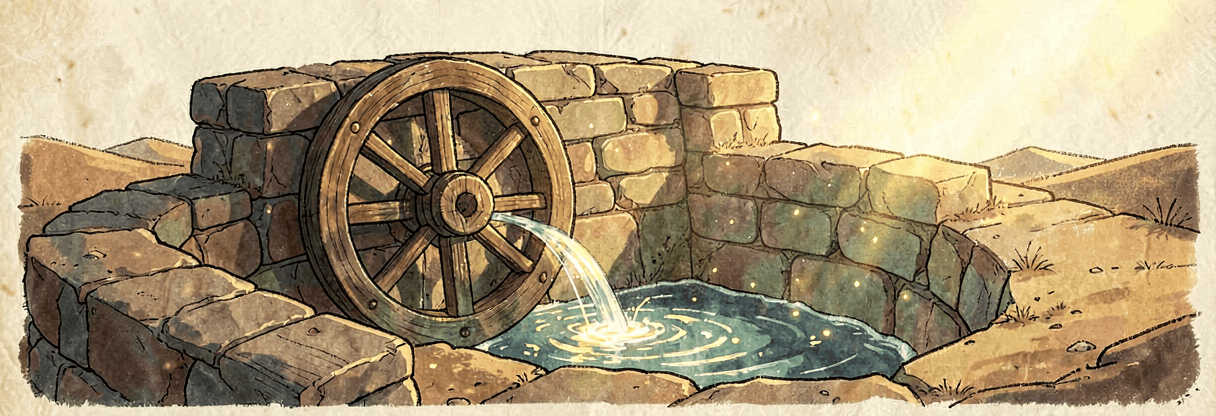
On At the Well, the Stranger
This parallel examines the motif of divine or covenantal encounters initiated at a communal water source, a narrative archetype common to the patriarchal narratives of the Hebrew Bible and the Johannine Gospel. While the Genesis accounts depict the well as a locus for securing marital alliances and the continuation of the lineage through human agency, the Johannine narrative transforms the setting into a theological confrontation regarding living water and messianic identity. Scholars note that the structural similarity serves to cast Jesus as the fulfillment of the patriarchal promise, yet the shift from physical provision to spiritual revelation marks a distinct theological divergence.

The motif of the stranger at the well serves as a profound narrative bridge between the Hebrew Bible and the Johannine Gospel, anchoring covenantal history in the shared necessity of water. In Genesis 29:10, Jacob's arrival at the well initiates a human drama of lineage, where rolling the stone and watering the flock secure the marriage that perpetuates the patriarchal promise. Similarly, Exodus 2:17 depicts Moses intervening to water the flocks of Jethro's daughters, an act of justice that precedes his own covenantal calling. These narratives emphasize divine providence working through social mechanisms to establish households and protect the vulnerable. Conversely, the Gospel of John transposes this archetype into a theological arena. When Jesus meets the Samaritan woman in John 4:7, the physical act of drawing water becomes secondary to the revelation of messianic identity. Jesus declares in John 4:13 that earthly water merely satisfies temporarily, whereas the 'living water' he offers grants eternal life. Here, the well ceases to be a site for securing a biological lineage and becomes a locus for spiritual regeneration. While the patriarchal accounts celebrate human agency guided by God to build a nation, the Johannine narrative subverts this expectation, presenting Jesus as the ultimate fulfillment of the promise, shifting the focus from physical survival to eternal salvation. Thus, the shared setting illuminates a distinct divergence: the transition from covenant through marriage to covenant through revelation.
What every account tells.
- iA traveler or stranger arrives at a well where shepherds or women gather.
- iiThe stranger interacts with local women or a woman at the water source.
- iiiWater is drawn or discussed as a central element of the encounter.
- ivThe encounter leads to a significant relational or covenantal development.
How each tradition tells it.
In the patriarchal narratives, the well functions as a social mechanism for finding a wife and securing the lineage, emphasizing human initiative guided by divine providence. The focus remains on the physical act of watering the flock and the establishment of a household.
The Johannine account reinterprets the well as a site of soteriological revelation, where the physical water points to the spiritual 'living water' offered by the Messiah. The encounter transcends social custom to reveal the identity of Jesus as the fulfillment of Jewish expectation.
Read the passages as one.
Where else this study appears.
- Water
Water represents cleansing, life, and the Holy Spirit's refreshing work. It is used in baptism to signify death to sin and new life.
- The Stranger
Welcoming the unknown traveller — every tradition makes the visitor a sacrament, the door wider than the household.
- Thirst
The body's craving as figure of the soul's longing — and, in Buddhism, as the very root of suffering.
Discussion
No one has written anything here yet. Some places to begin:
- Which tradition's framing of this idea felt strongest to you, and why?
- What's missing from this comparison — a tradition or a passage that should be here?
- Has reading these side-by-side changed how you'd read any of them alone?
Sign in to join the discussion.