Christianity
Matthew
“And before him shall be gathered all nations: and he shall separate them one from another, as a shepherd divideth his sheep from the goats:”
Abrahamic and Dharmic traditions converge on the motif of a post-mortem reckoning where moral conduct determines the soul's ultimate destination. While Christianity, Islam, and Zoroastrianism posit a linear, singular judgment culminating in eternal states, Buddhism emphasizes an ongoing, impersonal cycle of karmic retribution without a final eschatological terminus. Scholars debate whether the 'bridge' imagery in Zoroastrianism and Islam represents a shared ancient Near Eastern heritage or independent theological development addressing the problem of divine justice.
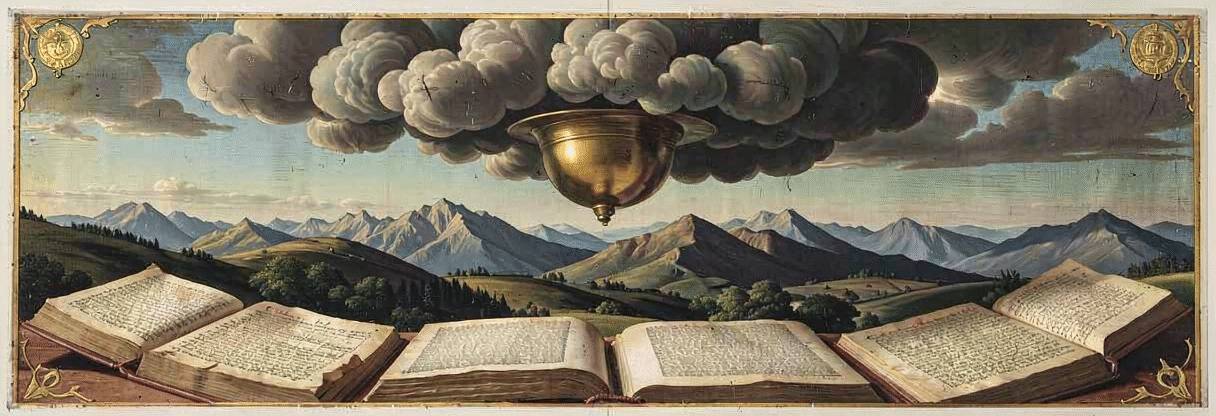
Across Abrahamic and Dharmic traditions, the conviction that moral conduct shapes post-mortem fate remains a profound shared motif. Whether through the weighing of deeds or the law of karma, cosmic justice ensures no action escapes accountability, effecting a separation between the righteous and the wicked. Yet, the eschatological horizons diverge significantly in their temporal structure and agency. Christianity, Islam, and Zoroastrianism posit a linear trajectory culminating in a singular, definitive judgment. In Matthew 25:32, Christ separates nations as a shepherd divides sheep from goats, emphasizing communal responsibility. Similarly, Islamic tradition describes the Mizan and Sirat, where Allah's absolute sovereignty determines an eternal, unchangeable state. Zoroastrianism mirrors this with the Chinvat Bridge, which widens for the righteous or narrows to a blade, reflecting a dualistic cosmology moving toward the Frashokereti. Conversely, Buddhism rejects a final terminus or divine arbiter. The Dhammapada 1:1 states, 'Mind is the forerunner of (all evil) conditions,' framing retribution as an immediate, impersonal cycle driven by intention rather than decree. While Jewish apocalypticism in Daniel 7:10 envisions the Ancient of Days presiding over a fiery stream, rabbinic thought often nuances this with intermediate purification. Ultimately, the tension lies between a singular, divine adjudication promising final restoration and an ongoing, self-regulating karmic process without a permanent judge.
Christian eschatology centers on a singular, final judgment by Christ where grace and faith mediate the verdict, distinguishing it from purely merit-based systems. The separation of 'sheep and goats' emphasizes communal responsibility and care for the marginalized as the criterion for judgment.
Islamic tradition emphasizes the absolute sovereignty of Allah in the weighing of deeds, where the scale (Mizan) and the bridge (Sirat) serve as literal mechanisms of divine justice. The outcome is determined by the precise balance of faith and works, leading to an eternal, unchangeable state.
Zoroastrianism features the Chinvat Bridge, which widens for the righteous and narrows to a blade for the wicked, reflecting a dualistic cosmology where the soul's own nature dictates its passage. This tradition posits a final renovation of the world (Frashokereti) that transcends individual judgment.
Buddhist doctrine rejects a final, singular judgment in favor of an impersonal, continuous cycle of karma and rebirth driven by intention rather than divine decree. The 'reckoning' is immediate and inherent in the nature of action, lacking a permanent judge or a final eschatological conclusion.
Jewish apocalyptic literature, such as Daniel, introduces a definitive judgment by the Ancient of Days, yet rabbinic tradition often emphasizes a more nuanced, intermediate state of purification rather than an immediate, binary eternal fate. The focus remains on the collective destiny of Israel and the restoration of the world to come (Olam Haba).
The call to order rightly what power has bent — a thread that runs from the prophets to the caliphs to the Mahabharata.
Resurrection, heaven and hell, the wheel of samsara, the bodhisattva's return — visions of what lies beyond the body.
The mortal clock that every tradition reads against an eternal one — Ecclesiastes' seasons, the Qur'an's swearing by the afternoon, Krishna who is Time grown great.
The doorway every tradition stands at without averting its eyes — Ecclesiastes' dust to dust, Paul's sting that has been swallowed, the Buddha's first noble truth.
The blade that divides truth from falsehood, friend from foe — every tradition turns the sword inward as much as outward.
The reaping at season's end — every tradition treats the gathered grain as figure of judgment, of mission, of the soul's gathered fruit.
He that endureth to the end — every tradition lives toward an end, and every tradition holds that the end is not the close of the story but the door of the longer one.
No one has written anything here yet. Some places to begin:
Sign in to join the discussion.