Christianity
Luke
“And he said unto them, I beheld Satan as lightning fall from heaven.”
This parallel examines the motif of a celestial being cast down due to pride or disobedience, appearing in Abrahamic traditions as a literal fall from heaven and in Buddhism as a spiritual defeat. While Christianity, Judaism, and Islam depict a cosmic expulsion of a rebellious angelic figure, Buddhism presents Mara's defeat as the overcoming of internal defilements by an enlightened being. Scholars debate whether the Isaiah 'Lucifer' passage originally referred to a Babylonian king before later traditions mythologized it as Satan, whereas the Qur'anic Iblis narrative emphasizes a theological test of obedience rather than a pre-creation fall.
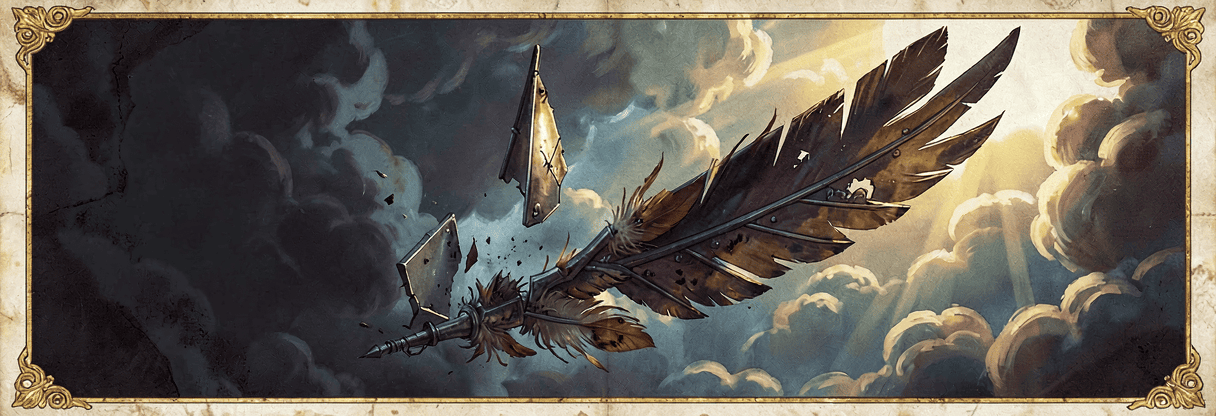
The motif of the fallen rebel serves as a critical nexus for understanding how Abrahamic and Dharmic traditions conceptualize the origins of evil and the nature of spiritual authority. In Christianity, Judaism, and Islam, a celestial or semi-divine figure challenges the cosmic order, resulting in a definitive expulsion that demarcates the boundary between obedience and rebellion. The Hebrew Bible's Isaiah 14:12, addressing the King of Babylon with the lament "How art thou fallen from heaven, O Lucifer," illustrates how political satire was later mythologized into a cosmic narrative of Satan's pre-creation fall. Conversely, the Qur'an presents Iblis not as a fallen angel but as a jinn whose refusal to bow to Adam stems from pride, framing the event as a specific test of obedience rather than an eternal cosmic rupture. While these traditions share the archetype of a high-status figure cast down due to hubris, the theological implications diverge sharply. Christianity often views this fall as the genesis of an eternal adversarial force, whereas Islam emphasizes human free will and the conditional nature of divine mercy. In contrast, Buddhism internalizes this struggle; Mara's defeat by the Buddha is not a literal expulsion from heaven but the symbolic overcoming of internal defilements like desire and death. Thus, while the Abrahamic narratives externalize the conflict as a historical or cosmological event, the Buddhist tradition transforms the "fall" into a psychological paradigm for enlightenment, highlighting a fundamental divergence between cosmic dualism and the transcendence of the ego.
The fall is often interpreted as a pre-creation event resulting in Satan's eternal enmity toward God, though Luke 10:18 frames it as a vision of Jesus' authority over demonic powers.
Isaiah 14:12 is widely regarded by scholars as an oracle against the King of Babylon, with the 'fall from heaven' imagery serving as political satire rather than a literal cosmological event.
Iblis is a jinn who refuses to bow to Adam out of pride, resulting in his expulsion from God's mercy, distinct from the Christian notion of a pre-Adamic fall from heaven.
No one has written anything here yet. Some places to begin:
Sign in to join the discussion.