Judaism
Genesis
“And Noah builded an altar unto the LORD; and took of every clean beast, and of every clean fowl, and offered burnt offerings on the altar.”
Across these traditions, the altar functions as a consecrated locus where the human and divine realms intersect through ritual offering. While Judaism and early Christianity emphasize the structural or typological significance of the stone table, Hinduism focuses on the fire itself as the divine agent. Scholarly debate persists regarding whether these parallels indicate a shared archaic Indo-European heritage or independent developments in sacrificial theology.
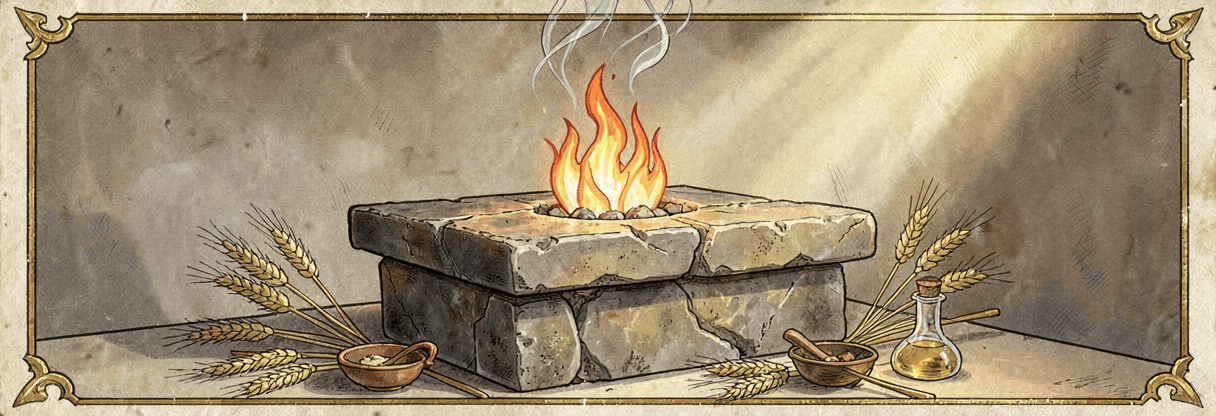
Across the Abrahamic and Dharmic traditions, the altar serves as a consecrated locus where human and divine realms intersect through ritual offering. In the Hebrew Bible, this space is defined by material specificity and legal precision. Genesis 8:20 records Noah building a stone structure to offer burnt offerings, establishing a precedent for the Mosaic law which prescribes a fixed stone table for blood atonement within the Tabernacle. Here, the physical locus remains central to the historical narrative of the Temple cult, grounding the sacred in tangible geography. Conversely, Christian theology in the Epistle to the Hebrews reinterprets this architecture christologically. Hebrews 13:10 declares, "We have an altar, whereof they have no right to eat which serve the tabernacle," effectively locating the sacrifice in the person of Jesus rather than a physical site. This shift renders the Jerusalem Temple's stone altar obsolete for the believer, transforming the concept from a static place to a spiritual reality. Hinduism presents a distinct divergence by focusing on the fire itself as the divine agent. The Rigveda identifies Agni as the high priest who conveys offerings, stating, "Agni I praise, the invoker, the offerer of gifts." In this tradition, the altar is less a static structure than the dynamic presence of the flame. While all three traditions agree that sacrifice mediates the sacred, Judaism and early Christianity emphasize the structural or typological significance of the stone table, whereas Hinduism prioritizes the elemental fire as the primary vehicle of ascent.
The Mosaic law prescribes a specific stone structure for blood atonement within the Tabernacle. This physical locus remains central to the historical narrative of the Temple cult.
The Epistle to the Hebrews reinterprets the altar christologically, locating the sacrifice in the person of Jesus rather than a physical site. This shift renders the Jerusalem Temple's stone altar obsolete for the believer.
The Rigveda identifies Agni, the fire god, as the priest who conveys offerings to the gods. The altar is less a static structure than the dynamic presence of the flame itself.
No one has written anything here yet. Some places to begin:
Sign in to join the discussion.