Christianity
Matthew
“Behold the fowls of the air: for they sow not, neither do they reap, nor gather into barns; yet your heavenly Father feedeth them. Are ye not much better than they?”
Abrahamic traditions frequently utilize the behaviors of insects and birds as didactic models for human ethical conduct, emphasizing divine provision and communal foresight. While Judaism and Islam explicitly attribute agency or divine inspiration to these creatures, Christianity typically employs them as passive examples of God's providence to encourage human trust. Scholarly debate persists regarding whether the Quranic depiction of the ant's speech represents a literal miracle or a metaphorical narrative device for Solomon's wisdom.
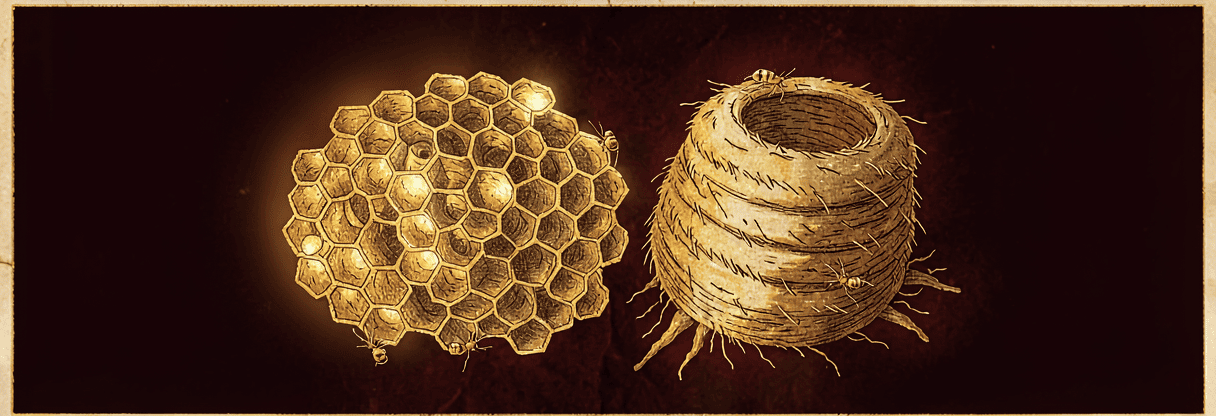
Across Abrahamic traditions, the microscopic world of insects and birds serves as a profound mirror for human ethical conduct, revealing a shared conviction that divine wisdom permeates even the smallest creations. In Judaism, Proverbs 6:6 explicitly commands the "sluggard" to "consider her ways, and be wise," elevating the ant to the status of an intrinsic moral teacher whose industry demands direct human imitation. This pedagogical link grants the creature significant agency as a model of prudence. Islam expands this agency through narrative miracle; in Surah 27:18, an ant speaks to warn its community, while Surah 16:68 states the Lord "inspired the bee," framing its labor as a response to divine revelation rather than blind instinct. Here, the small creature possesses a communicative consciousness granted by God. Conversely, Christian tradition, particularly in Matthew 6:26, shifts the focus from the creature's agency to the Creator's provision. Jesus invites observers to "Behold the fowls of the air," not to emulate their labor, but to trust in God's care, as they "sow not, neither do they reap." While Judaism and Islam highlight the creature's active participation in divine order, Christianity utilizes nature primarily to cultivate human reliance on providence. Thus, the same natural phenomena yield distinct ethical imperatives: imitation of the wise ant, recognition of inspired communication, or cultivation of trusting faith.
The birds of the air are cited not for their own wisdom but as proof of God's care, shifting the focus from the creature's agency to the Creator's provision. The moral imperative is on human trust rather than the imitation of the creature's specific labor.
The ant is explicitly commanded to be a teacher of prudence to the 'sluggard,' establishing a direct pedagogical link between the insect's industry and human diligence. The text categorizes the ant as one of the 'exceeding wise' small things, granting it intrinsic intellectual status.
The ant is depicted as speaking and issuing a command to its community, suggesting a level of consciousness and communication granted by God. The bee is described as receiving 'wahy' (inspiration), framing its construction of the hive as a divinely guided act rather than mere instinct.
No one has written anything here yet. Some places to begin:
Sign in to join the discussion.