Judaism
Proverbs
“The LORD possessed me in the beginning of his way, before his works of old.”
The personification of Wisdom as a feminine divine agent active in creation appears prominently in Second Temple Judaism and is appropriated in early Christian Christology, while the Qur'an acknowledges divine knowledge without adopting a feminine hypostasis. In Proverbs 8, Wisdom is depicted as a master craftsman present before creation, a motif Paul reinterprets as Christ in 1 Corinthians, whereas Islamic theology strictly maintains divine transcendence (tawhid) against any anthropomorphic or gendered attributes of God. Scholars debate whether the Christian identification of Jesus with Sophia represents a direct theological continuity or a strategic reappropriation of Jewish wisdom literature to articulate the Logos.
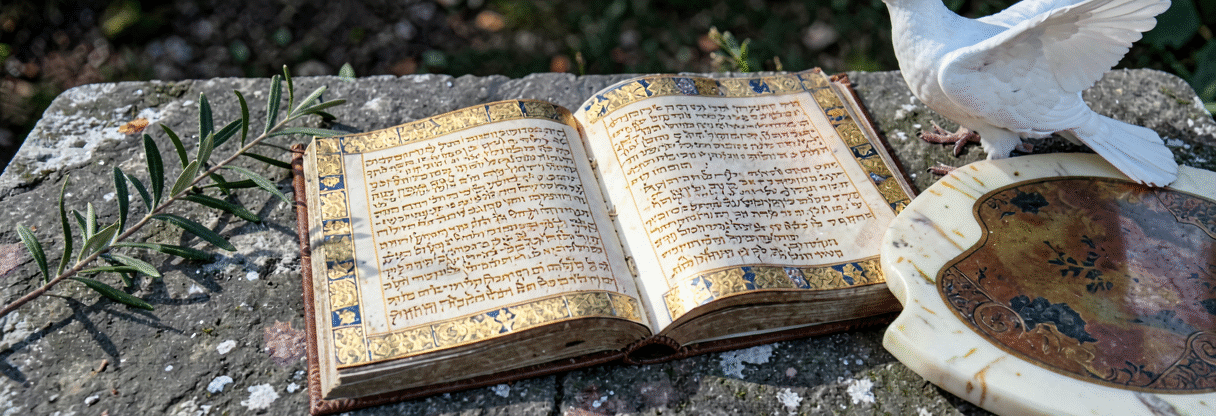
The personification of Divine Wisdom as a pre-existent agent in creation serves as a profound theological nexus across the Abrahamic traditions, yet its ontological status diverges sharply. In the Hebrew canon, Proverbs 8 depicts Wisdom as a master craftsman present before the world's formation, stating, "The LORD possessed me in the beginning of his way" (Proverbs 8:22). Here, Wisdom functions as a literary hypostasis or attribute of Yahweh, emphasizing that true understanding is accessible only through the fear of the Lord. Early Christianity, however, reconfigured this motif soteriologically. The Apostle Paul explicitly identifies Christ as "the power of God, and the wisdom of God" (1 Corinthians 1:24), transforming a poetic device into a distinct divine person within the Godhead. This Christological appropriation suggests that the abstract attribute of Wisdom has become incarnate. Conversely, Islamic theology rigorously safeguards divine transcendence (tawhid) against such personification. While the Qur'an affirms Allah's absolute knowledge and creative decree, it rejects any feminine hypostasis or partner. Surah 55:1 declares, "The Beneficent. He hath taught the Qur'an," centering divine action on Allah's direct will rather than a mediating feminine entity. Thus, while all three traditions acknowledge a pre-existent divine knowledge instrumental to creation, Judaism and Christianity explore its relational depth through personification, whereas Islam maintains its absolute unity within the Divine Essence.
In the Hebrew canon, Wisdom (Hokhmah) is a literary personification or attribute of Yahweh rather than a distinct hypostasis, though later Jewish mysticism would develop this further. The text emphasizes the inaccessibility of Wisdom to humanity except through the fear of the Lord.
The New Testament identifies the personified Wisdom of Proverbs directly with the historical person of Jesus Christ, transforming the attribute into a distinct divine person within the Godhead. This move shifts the focus from a literary device to a soteriological reality where the believer encounters Wisdom incarnate.
The Qur'an affirms God's absolute knowledge and the presence of divine decree but explicitly rejects any feminine personification or partner to God. The concept of 'Ilm (knowledge) is an attribute of Allah, not a separate feminine entity participating in creation.
Not information but discernment — the fear of the Lord, the middle way, the knowledge that conquers the self.
God is depicted as a caretaker who leads, protects, and provides for his people. Jesus claims this role to describe his relationship with his followers.
Distinct from wisdom: the act of knowing rather than the disposition of the wise — and every tradition warns that some kinds of knowing destroy.
No one has written anything here yet. Some places to begin:
Sign in to join the discussion.