Christianity
Matthew
“He is not here: for he is risen, as he said. Come, see the place where the Lord lay.”
This parallel examines the motif of divine deliverance from death across three Abrahamic traditions. While all affirm God's power to reverse separation from the divine, the mechanisms differ significantly. Christianity asserts a bodily resurrection following confirmed death, whereas Islam maintains the figure was never killed but raised directly. Jewish texts often employ this language typologically for national redemption rather than individual resurrection.
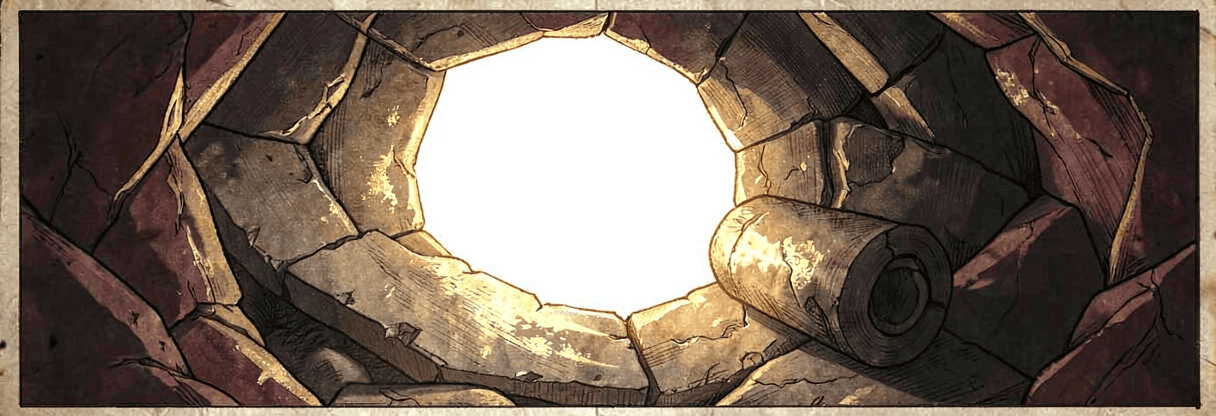
The motif of divine deliverance from death unites Abrahamic faiths in affirming God's sovereignty over mortality, yet the mechanisms of this reversal reveal profound theological divergences. In Christianity, the empty tomb serves as the historical and kerygmatic cornerstone of soteriology. Matthew 28:6 declares, "He is not here: for he is risen," establishing a bodily resurrection that validates the incarnation and atonement. This narrative insists on a confirmed death followed by physical restoration, transforming a site of execution into a locus of hope. Conversely, Islam fundamentally rejects the premise of death itself. Surah 4:157 states, "they slew him not nor crucified him, but it appeared so unto them," while Surah 3:155 affirms God gathering Jesus directly: "O Jesus, lo! I am gathering thee and causing thee to ascend unto Me." Here, divine protection precludes the shame of execution, preserving the prophet's honor without the necessity of resurrection from the grave. Jewish tradition, while acknowledging God's power to reverse corruption, often employs such language typologically. Psalm 16:10, "For thou wilt not leave my soul in hell; neither wilt thou suffer thine Holy One to see corruption," is frequently read by exegetes as a prophetic hope for national restoration or a future general resurrection rather than a singular historical event. Thus, while all three traditions converge on God's power to overcome death, Christianity anchors faith in a bodily return, Islam in a pre-emptive ascension, and Judaism in a collective, eschatological promise.
This tradition centers on the empty tomb as historical proof of bodily resurrection, establishing the foundation of Christian soteriology. Scholars debate the historicity of the tomb narrative versus its theological function as a kerygmatic symbol.
In this context, the texts function as prophetic hope for national restoration or future general resurrection rather than a single historical event. Exegetes often read these verses as messianic typology fulfilled in later Christian claims.
This tradition rejects the premise of death entirely, asserting the crucifixion was an illusion and the figure was ascended bodily without burial. The narrative protects the prophet's honor by denying the shame of execution while affirming divine protection.
No one has written anything here yet. Some places to begin:
Sign in to join the discussion.