Christianity
Matthew
“Woe unto you, scribes and Pharisees, hypocrites! for ye are like unto whited sepulchres, which indeed appear beautiful outward, but are within full of dead men’s bones, and of all uncleanness.”
Across these traditions, a consistent critique emerges against ritual observance divorced from ethical intent or internal sincerity. While all four traditions prioritize the state of the heart or mind over mere external compliance, they diverge on the mechanism of purification: Judaism and Christianity emphasize a divine act of circumcision or renewal of the heart, whereas Islam focuses on the sincerity (ikhlas) of the believer's intention, and Confucianism locates the root of ritual efficacy in the cultivation of genuine moral feeling (cheng). Scholars note that while the prophetic traditions often frame this as a corrective to legalism, the Confucian approach treats inner sincerity as the ontological foundation that makes the outer form meaningful rather than a rejection of the form itself.
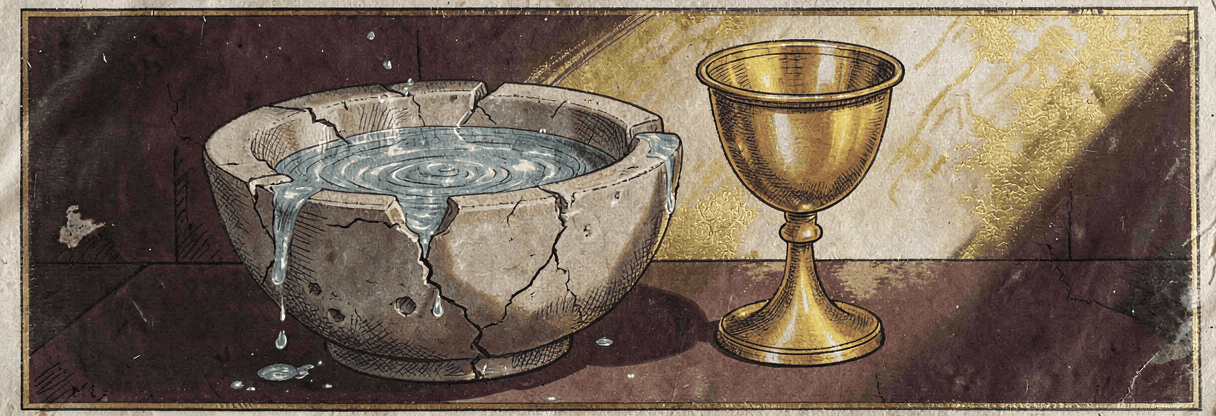
Across diverse sacred traditions, a profound consensus emerges: ritual acts divorced from internal moral alignment are deemed hollow. In Christianity, Matthew 23:27 condemns the Pharisees as 'whited sepulchres,' highlighting how external righteousness can mask internal corruption, necessitating a spiritual circumcision of the heart. Similarly, Judaism, while upholding covenantal signs, insists in Joel 2:13 that believers 'rend your heart, and not your garments,' establishing repentance as the prerequisite for divine acceptance. Islam introduces ikhlas, or sincerity, as the determinant of a deed's validity; Surah 107:4 warns against those who perform prayers yet neglect neighborly kindness, rendering worship void of substance. Confucianism offers a distinct perspective through the concept of cheng, or inner sincerity. Unlike the prophetic critique that often frames inner purity as a corrective to legalism, Confucianism views cheng as the ontological foundation that animates ritual (li). As seen in the Analects, the sage cultivates this genuine moral feeling so that external conduct naturally aligns with the Way. Thus, while all four traditions prioritize the state of the heart over mere compliance, they diverge on the mechanism of purification. Judaism and Christianity emphasize a divine act of renewal, Islam focuses on the believer's intention, and Confucianism locates the root of efficacy in the cultivation of authentic moral feeling, transforming ritual from a burden into a natural expression of the self.
Christianity frames the tension as a fulfillment of the law where the Spirit circumcises the heart, often contrasting the 'letter' which kills with the 'spirit' which gives life. The critique of the Pharisees emphasizes that external righteousness masks internal corruption, necessitating a radical inward transformation.
Judaism maintains the necessity of the covenantal signs while demanding that the 'foreskin of the heart' be removed to prevent hardness against God. The prophetic tradition does not discard the law but insists that the internal disposition of repentance (teshuvah) is the prerequisite for the acceptance of sacrifice and fasting.
Islam introduces the concept of ikhlas (sincerity) as the determinant of a deed's validity, where actions are judged by intentions. The critique focuses on those who perform the pillars of Islam but neglect the rights of others and the poor, rendering their worship void of spiritual substance.
Confucianism views inner sincerity (cheng) not as a rejection of ritual (li) but as the vital force that animates it; without it, the ritual is an empty shell. The sage cultivates this inner truth so that external conduct naturally aligns with the Way, rather than viewing the inner and outer as opposing forces.
The hidden chamber where the real worship happens — every tradition watches the heart more closely than the hands.
The reality that does not change — every tradition sets it as the criterion against which speech, conduct, and worship are tested.
Clean of body, clean of heart — every tradition sets a threshold for the holy and gives a discipline for crossing it.
The face beheld in glass that one cannot afterward forget — every tradition uses the mirror to figure self-knowledge, partial vision, and the soul's true reflection.
No one has written anything here yet. Some places to begin:
Sign in to join the discussion.